August 3, 2026
19 min read
10 Newsletter Best Practices to Follow in 2026
Master the art of email with our 10 newsletter best practices. Learn to segment, write better subject lines, and grow your audience in 2026. Read now!
In 2026, newsletter strategy is getting more disciplined, not more casual. beehiiv's 2025 State of Email Newsletters report shows daily senders grew from 4.9% in 2023 to 15.82% in 2024, and weekly sending rose from 37.9% in 2024 to 65.62% in 2025 beehiiv's 2025 State of Email Newsletters report. That shift says a lot, audiences now expect a reliable publishing rhythm, not occasional blasts.
That's why the strongest newsletter best practices today cover the whole lifecycle, from inbox placement and list segmentation to content structure and repurposing. HubSpot's 2025 report also shows creators are increasingly using AI for brainstorming and content creation, while distributing newsletter content across LinkedIn and Facebook as well as email HubSpot's 2025 State of Newsletters report. In practice, that means your newsletter can't live as a single email sent into the void. It has to function as a repeatable content engine.
The good news is the fundamentals are clear. Strong newsletters are built on technical reliability, audience relevance, readable design, and a content mix that earns trust before it asks for action. Then you amplify the winning ideas into social content so every issue works harder across channels.
Table of Contents
- 1. Segment Your Audience for Personalized Content
- 1. Segment Your Audience for Personalized Content
- 2. Craft Compelling Subject Lines That Drive Opens
- 4. Build Authentic Connection Through Storytelling
- 4. Build Authentic Connection Through Storytelling
- 6. Maintain a Consistent Send Schedule and Frequency
- 6. Maintain a Consistent Send Schedule and Frequency
- 7. Optimize for Deliverability With Technical Best Practices
- 8. Use Data-Driven Testing to Optimize
- 9. Balance Promotional and Value-Driven Content
- 10. Personalize Beyond First Name With Dynamic Content
- Newsletter Best Practices: 10-Point Comparison
- Amplify Your Newsletter's Impact
1. Segment Your Audience for Personalized Content
Segmentation separates newsletters that feel useful from those that feel sprayed across a list. A single message rarely fits every subscriber, and the difference shows up fast in opens, clicks, and unsubscribes. HubSpot's 2025 report found that LinkedIn (52%) and Facebook (50%) were used more often to distribute newsletter content than email itself (42%) HubSpot's 2025 State of Newsletters report, which is a reminder that a newsletter often needs to serve different audiences in different places. If you send one generic message to everyone, you usually end up writing for no one.
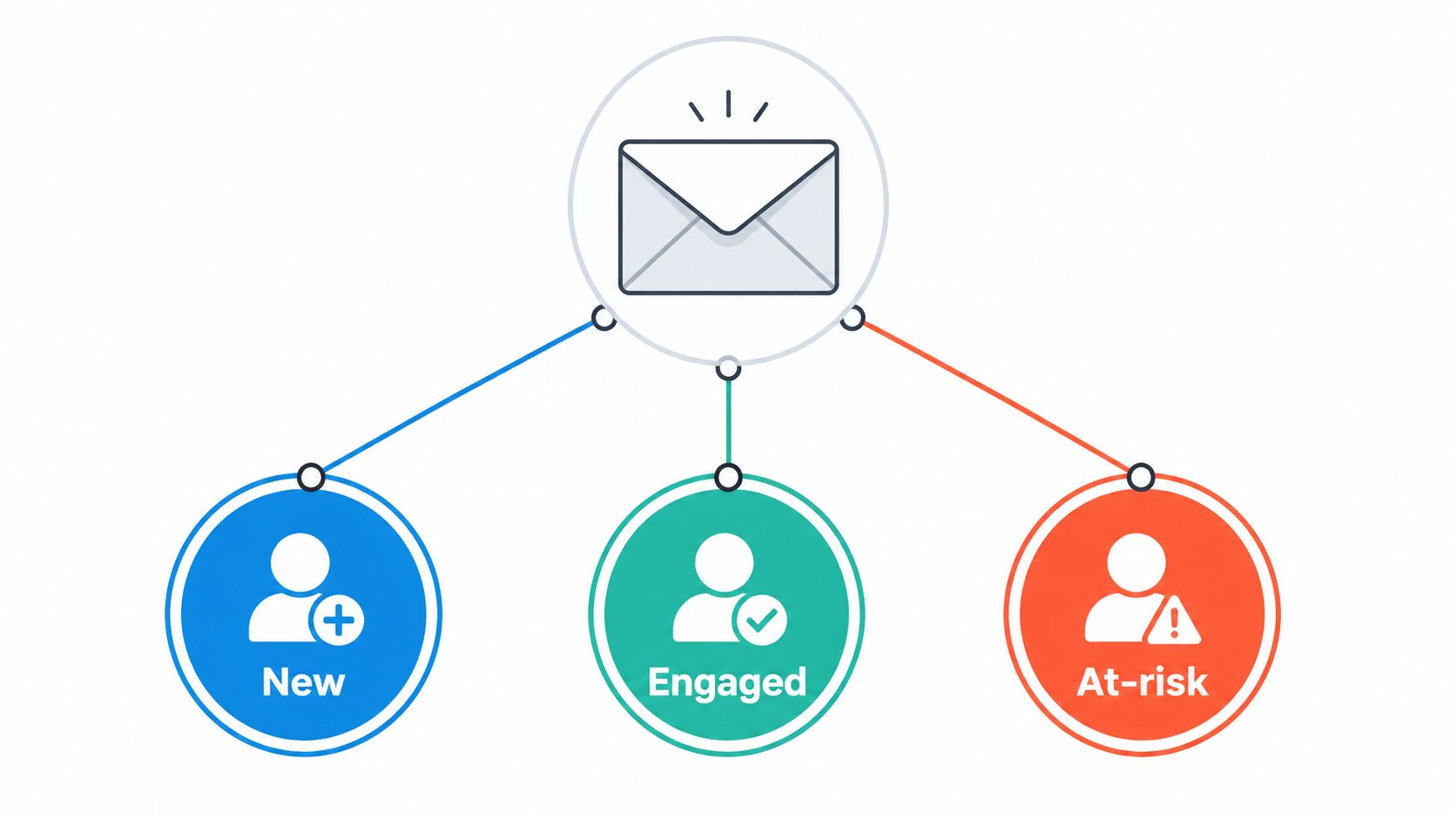
Start with the simplest possible split, then let behavior refine it. A consulting firm might begin with new leads, active clients, and dormant subscribers. A creator might separate readers by topic interest or paid versus free tier. The point is to make each send feel more relevant without turning your workflow into a maze.
Practical rule: build your first segments around what you already know, industry, engagement level, and purchase or reading behavior. You do not need a perfect data model to make the first improvement.
That also matters when you repurpose newsletter content for social. A WaveGen brand kit helps you keep visual and message consistency across channels, while improving click-through rates with tighter content alignment gives each segment a clearer path to action. For subject-line work that supports these segments, use the top subject line formulas for growth teams to match the promise in the inbox to the reader's actual interest.
1. Segment Your Audience for Personalized Content
Segmentation is the difference between a newsletter that feels useful and one that feels sprayed across a list. HubSpot's 2025 report found that LinkedIn (52%) and Facebook (50%) were used more often to distribute newsletter content than email itself (42%) HubSpot's 2025 State of Newsletters report, which is a reminder that a newsletter often serves different audiences in different places. If you send one generic message to everyone, you usually end up writing for no one.
Start with the simplest possible split, then let behavior refine it. A consulting firm might begin with new leads, active clients, and dormant subscribers. A creator might separate readers by topic interest or paid versus free tier. The point is to make each send feel more relevant without turning your workflow into a maze.
Practical rule: build your first segments around what you already know, industry, engagement level, and purchase or reading behavior. You do not need a perfect data model to make the first improvement.
That also matters when you repurpose newsletter content for social. A WaveGen brand kit helps you tailor the same core idea into different visuals or captions for different segments, so a single newsletter insight can become a more targeted LinkedIn post for prospects and a different Instagram carousel for loyal readers. If you need a field-tested breakdown of how to convert audience behavior into stronger distribution, this guide on how to improve click-through rates is a useful companion.
The trade-off is obvious, more segmentation means more complexity. So keep a simple review habit. Check each segment separately, watch what gets engagement, and expand only after the first two or three groups are clearly useful.
2. Craft Compelling Subject Lines That Drive Opens
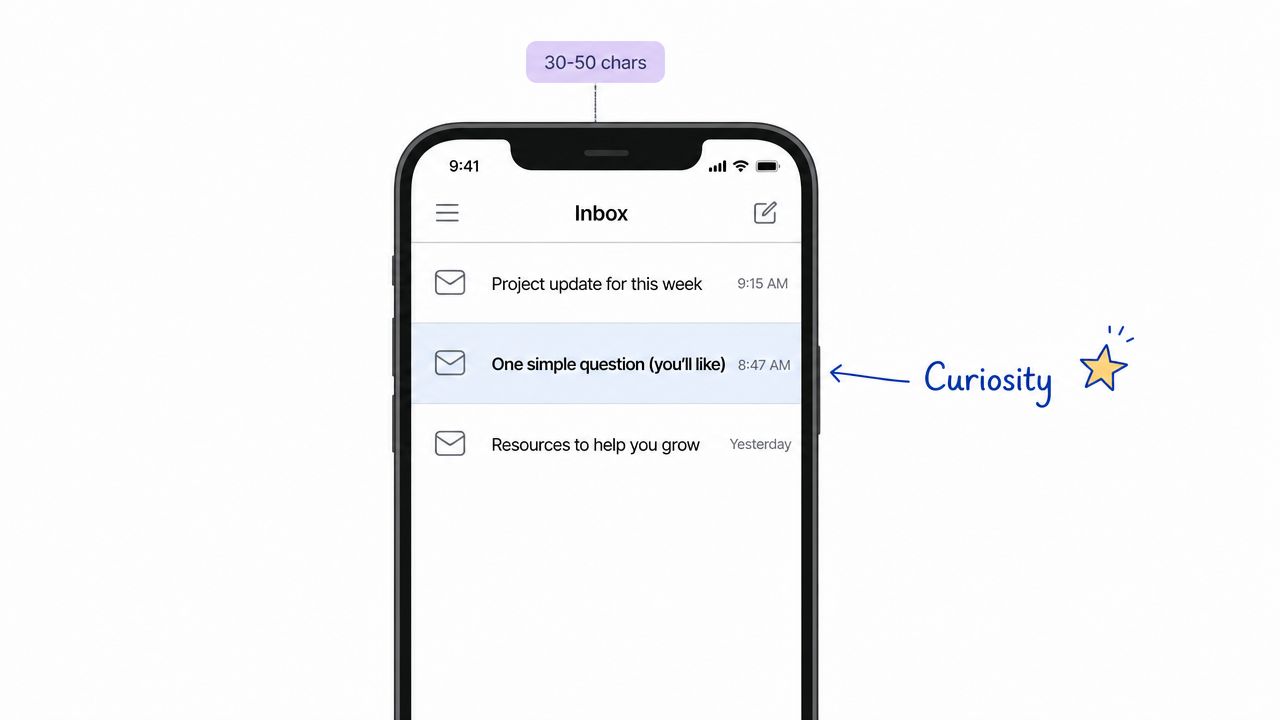
The subject line is your first performance gate. If it doesn't earn the open, nothing else in the email matters. Good subject lines are clear, specific, and human. They can create curiosity, but they should never trick the reader into opening something unrelated.
The best newsletter subject lines usually do one of three things well, they promise a benefit, they make a reader feel recognized, or they set up a useful expectation. Morning Brew's “Your daily dose of business news” works because it feels routine and clear, while more playful lines can work when the brand voice already teaches readers to expect that style. The problem is not creativity. The problem is confusion.
Use one variable at a time when testing. Try an idea-led subject line against a benefit-led one, or a concise version against a slightly more descriptive one. Then keep the version that matches your audience's behavior, not your personal taste.
This is also where social repurposing gets smarter. If your newsletter has a strong hook, you can turn that same framing into a post or carousel later. Articles on copywriting for social media often focus on scroll-stopping language for a reason, and that logic carries over here. A practical reference is top subject line formulas for growth teams, which can help you sharpen the angle before you send.
A good rule of thumb is simple. Write for clarity first, intrigue second, and avoid subject lines that sound like generic marketing automation.
4. Build Authentic Connection Through Storytelling
A useful tip can be forgotten by lunch, but a short story about a mistake, a lesson, or a pattern you noticed tends to stay with the reader. That matters for consultants, coaches, and creators, because trust often has to exist before anything is sold.
The strongest newsletters usually open with a concrete moment, then move to the takeaway. That can be a lesson from a recent project, a surprising reader response, or a pattern noticed over several client calls. Naval Ravikant uses philosophical observations, Pat Flynn often draws lessons from his business journey, and Brené Brown's writing blends research with vulnerability. The common thread is specificity, not style.
A useful structure is simple.
- Start with a scene: name the problem, moment, or decision.
- Add one detail: give the story a human edge.
- Pivot to the lesson: make the point quickly so the reader does not wait too long.
Storytelling also helps your social repurposing. A newsletter anecdote can become a quote card, a short video script, or a carousel that leads with the same insight. If your brand voice feels inconsistent from email to social, voice and tone guidelines for social repurposing can help keep the message aligned before you turn a newsletter idea into a post. For video-driven repurposing, Wideo's personalized video guide is a practical reference for turning a written story into a format that still feels personal.
Keep the story tight and relevant to the reader's problem. A newsletter should sound like a real person sharing something useful, not a brand trying to sound conversational.
4. Build Authentic Connection Through Storytelling
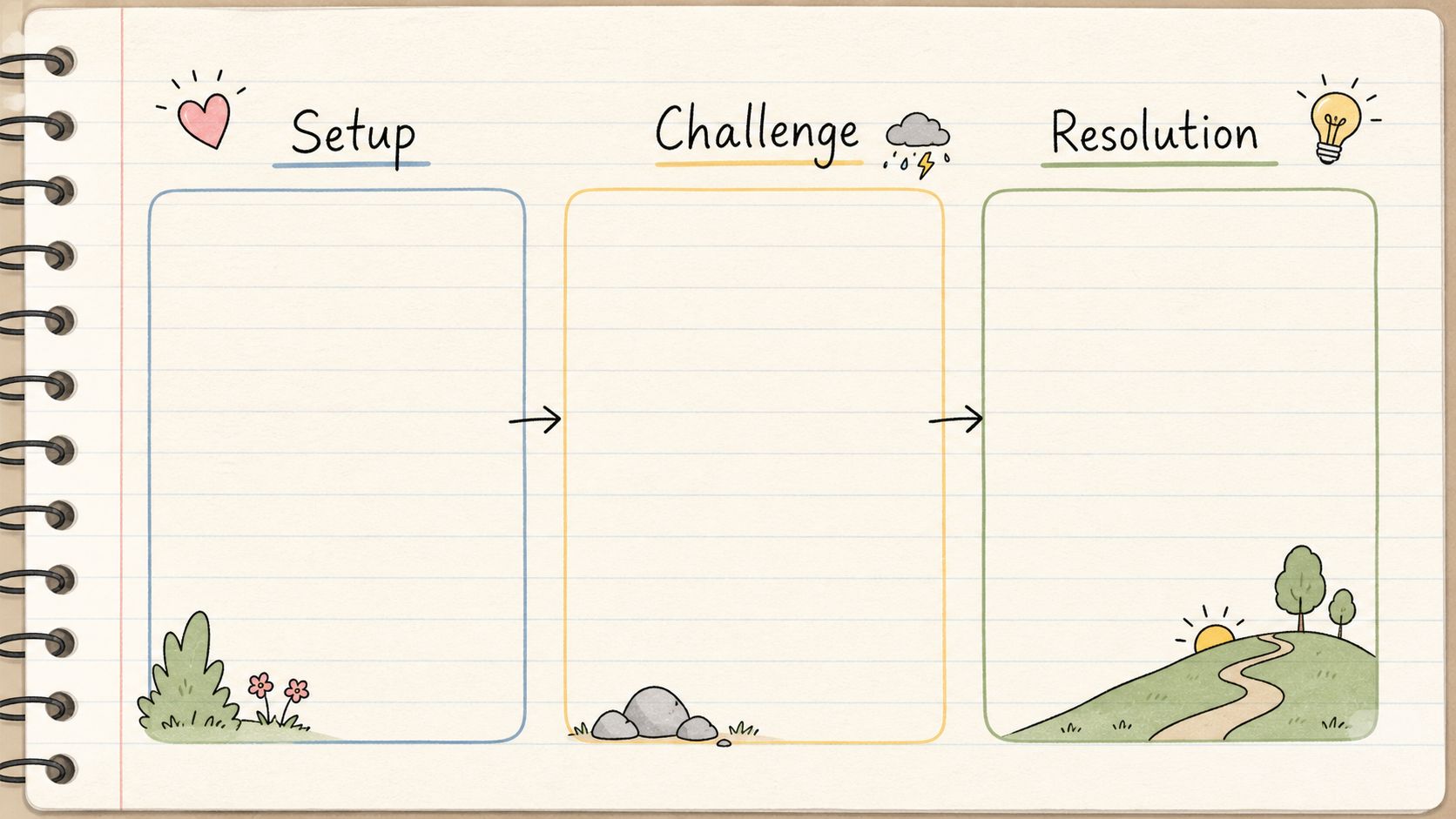
Storytelling gives a newsletter memory. A useful tip can be forgotten by lunch, but a short narrative about a mistake, an insight, or a client pattern tends to stick. That matters for consultants, coaches, and creators, because trust is often the core product before anything is sold.
The strongest newsletters usually open with a concrete moment, then move to the takeaway. That can be a lesson from a recent project, a surprising reader response, or a pattern noticed over several client calls. Naval Ravikant uses philosophical observations, Pat Flynn often draws lessons from his business journey, and Brené Brown's writing blends research with vulnerability. The common thread is not style, it's specificity.
A useful structure is simple.
- Start with a scene: name the problem, moment, or decision.
- Add one detail: give the story a human edge.
- Pivot to the lesson: make the point quickly so the reader doesn't wait too long.
Storytelling also helps your social repurposing. A newsletter anecdote can become a quote card, a short video script, or a carousel that leads with the same insight. If your brand voice feels inconsistent from email to social, voice and tone guidelines can help you keep the same personality across formats.
The trade-off here is length. Stories that wander lose readers. Keep the setup tight, make the point early, and don't let the anecdote take over the email. The best newsletter stories earn the right to be useful.
6. Maintain a Consistent Send Schedule and Frequency
Consistency trains attention. If readers know roughly when to expect your newsletter, they're more likely to look for it instead of ignoring it. Weekly cadence has become the default for many publishers because it gives the audience a clear rhythm without demanding constant production. The point is not to copy everyone else's schedule, it's to build a pattern readers can rely on.
The right cadence is the one you can sustain without cutting quality. Some brands publish daily because their audience wants a fast news pulse. Others perform better with weekly or monthly sends because the content needs more context and polish. Frequency should fit the format, and it should also fit the team's actual capacity on busy weeks, not just during a launch or a slow period.
A schedule does more than organize internal work. It sets expectations on the reader side. If you promise weekly and then disappear for a month, people stop checking for your emails. If you send too often with thin material, they learn to ignore the next issue or unsubscribe. The practical test is simple, can your team keep the standard steady when priorities shift?
Practical rule: choose a cadence you can hold during busy weeks, not just during launches. A newsletter that survives pressure is stronger than one that only works when the team has spare time.
Frequency decisions also affect how you repurpose the newsletter elsewhere. A steady send rhythm gives you a predictable source of ideas for social posts, short videos, and carousel content, which makes your broader content calendar easier to manage. If you want to align email timing with broader distribution, data-driven posting strategies from PostSyncer can help you compare timing patterns before you lock in a cadence. That matters because the best schedule is not just consistent, it also fits how your audience tends to pay attention across channels.
Repurposing helps the newsletter work harder without adding a full new production track. One issue can fuel multiple social posts, but only if the send cadence leaves enough time to extract and adapt the strongest points. If your social schedule is chaotic, your newsletter can become the stable anchor that keeps content moving.
6. Maintain a Consistent Send Schedule and Frequency
Consistency trains attention. If readers know roughly when to expect your newsletter, they're more likely to look for it instead of ignoring it. That's one reason weekly cadence has become so dominant, as beehiiv's 2025 report showed weekly sending rising from 37.9% in 2024 to 65.62% in 2025 beehiiv's 2025 State of Email Newsletters report. The market is clearly rewarding predictable rhythm.
The right cadence is the one you can sustain without sacrificing quality. Some brands publish daily because their audience expects a fast news pulse. Others win with weekly or monthly sends because the content is deeper and more considered. Frequency should fit the format, not the other way around.
A good schedule does more than manage workload. It also shapes reader expectations. If you promise weekly and then go silent for a month, you teach people to stop paying attention. If you over-send with thin content, you train them to unsubscribe.
Practical rule: choose a cadence you can hold during busy weeks, not just during launches. A newsletter that survives pressure is stronger than one that only works when the team has spare time.
Repurposing helps here too. A consistent newsletter can feed social content on a predictable cadence, which makes your broader content calendar easier to maintain. If your social schedule is chaotic, your newsletter can become the anchor that steadies the whole system.
The best send frequency is a promise you can keep. Reliability builds more trust than occasional bursts of brilliance.
7. Optimize for Deliverability With Technical Best Practices
Deliverability is the quiet foundation of every newsletter program. If your authentication is weak or your list is messy, good writing won't save the send. Recent guidance puts SPF, DKIM, and DMARC at the front of the checklist, along with checking domain reputation and blacklist status before obsessing over creative tweaks MailGenius email newsletter best practices.
That order matters. Teams often spend days perfecting subject lines and layouts while ignoring the systems that determine inbox placement. A dedicated sending domain, a recognizable sender name, and a healthy reply-to setup all help readers and email providers trust the message.
List hygiene is just as important. Remove inactive subscribers, watch bounce behavior, and pay attention to complaint patterns. A list full of old addresses or uninterested contacts tends to drag down performance over time. The healthiest newsletter programs treat maintenance as ongoing work, not cleanup after a problem appears.
For multi-brand operators, this gets even more operational. You're not just writing content, you're managing sending behavior across properties. That means reputation, authentication, and consistency become part of the creative process, not a separate technical task handed off once a year.
A short deliverability checklist helps.
- Authenticate the domain: set up SPF, DKIM, and DMARC before scaling.
- Use a real sending identity: keep the sender name and reply-to address recognizable.
- Clean the list regularly: remove stale or inactive contacts.
- Review alerts early: use platform dashboards to catch trouble before it spreads.
Good email design gets attention. Good deliverability earns the right to be seen.
8. Use Data-Driven Testing to Optimize
Testing removes guesswork. Instead of debating what “feels better,” you send two versions, watch the behavior, and keep the winner. A/B testing works best when you isolate one variable at a time, because that's how you know what moved the result.
Subject lines are usually the first place to start. They influence opens more directly than most other elements, and they're fast to test. After that, move to CTA wording, send time, or layout changes. Don't test everything at once, because noisy tests create misleading conclusions.
A disciplined testing process also gives your team a memory. When you document what won and why, you stop repeating old mistakes and start building a practical playbook. That's especially useful for growth teams managing multiple campaigns, because one good test becomes a reusable rule instead of a one-off win.
Key insight: the point of testing isn't to prove that one idea was clever. It's to find the version your readers consistently prefer.
Testing also supports repurposing. If a subject line or CTA angle wins in email, that same message can often be adapted for a post, carousel, or short-form video. That's where modern tools make the workflow easier, because the highest-performing hook doesn't need to stay trapped in one channel.
If you're serious about newsletter best practices, make testing a standing habit. A few controlled experiments each month beat a lot of opinions after the fact.
9. Balance Promotional and Value-Driven Content
A newsletter that sells too hard starts losing trust. A newsletter that never promotes anything can become useful but commercially weak. The practical middle ground is to lead with value and keep the promotional material clearly secondary. Ortto's newsletter best practices overview recommends a roughly 90/10 split for educational versus promotional content, while some market advice uses 80/20 Ortto's newsletter best practices overview. The exact ratio is a heuristic, not a universal rule, so the right mix depends on audience expectations and the role your newsletter plays in the business.
That matters because different businesses need different mixes. A consultant may need more education upfront to establish authority. A creator with an established audience may have more room for offers. A software team may need to balance product updates with useful guidance so readers stay engaged instead of tuning out.
The practical move is to structure the newsletter so the reader gets value before the ask. Share the insight, the example, or the resource first. Then place the promotion where it feels like a logical next step rather than a surprise interruption. When promotions are useful, they feel less like sales and more like guidance.
A quick way to pressure-test your mix is to ask whether a reader would still consider the email worth opening if the offer section were removed. If the answer is no, the newsletter is probably leaning too far into promotion.
This balance also makes social repurposing more efficient. Value-rich sections turn into posts more naturally than pure sales copy, and those posts can bring the audience back to the original issue. Tools like WaveGen.ai fit well here because they are built to turn source content into branded social assets without forcing you to rewrite everything from scratch.
Promotional content should support the reader, not surprise them.
10. Personalize Beyond First Name With Dynamic Content
First-name personalization is weak on its own. Readers notice when a message feels technically personalized but contextually generic. Real personalization adapts the content itself, including examples, recommendations, or calls to action, based on behavior, role, location, or previous interactions.
That's why dynamic content matters. A SaaS newsletter might show different product tips to admins, marketers, and founders. A coach might change examples based on a reader's stage of business. A media brand can surface different articles based on what someone has clicked before. The email still comes from one sender, but the experience feels more relevant.
HubSpot's 2025 report found that 28% of creators use AI for brainstorming and 25% for content creation, and early adopters reported saving 1 to 3 hours per week HubSpot's 2025 State of Newsletters report. That doesn't mean AI replaces judgment. It means teams can use it to scale personalization ideas faster, then refine the output with real audience knowledge.
A few good ways to start:
- Use behavior first: clicks and opens are easier signals than complex predictions.
- Segment by role or interest: that changes the examples without overcomplicating the build.
- Create fallback copy: every dynamic block should still make sense if data is missing.
- Watch for over-personalization: too much tailoring can feel invasive if the data story isn't clear.
Personalization is most effective when it feels helpful, not clever. Readers don't need to know the machinery. They just need the newsletter to feel like it was written with them in mind.
Newsletter Best Practices: 10-Point Comparison
| Strategy | Implementation Complexity 🔄 | Resource Requirements ⚡ | Expected Outcomes 📊 | Ideal Use Cases 💡 | Key Advantages ⭐ |
|---|---|---|---|---|---|
| Segment Your Audience for Personalized Content | High, data & rules setup 🔄 | Medium–High, CRM, analytics, tagging ⚡ | Higher relevance, open & CTR lift 📊 | Multi-audience lists, targeted campaigns 💡 | Stronger personalization, reduced unsubscribes ⭐ |
| Craft Compelling Subject Lines That Drive Opens | Low, copy testing workflow 🔄 | Low, copy skills & A/B tools ⚡ | Significant open rate improvement 📊 | Any send where opens matter (all newsletters) 💡 | High impact for low effort; immediate feedback ⭐ |
| Create Mobile-Optimized Email Templates | Medium, responsive design work 🔄 | Medium, design, testing tools ⚡ | Better mobile UX, fewer layout issues 📊 | Mobile-first audiences, transactional emails 💡 | Improved CTR & deliverability on phones ⭐ |
| Build Authentic Connection Through Storytelling | Medium, narrative craft & editing 🔄 | Low–Medium, writer time, examples ⚡ | Increased loyalty, shareability, engagement 📊 | Personal brands, coaches, creators 💡 | Emotional resonance; differentiates brand ⭐ |
| Implement Clear Calls-to-Action (CTAs) With Strategic Placement | Low–Medium, placement & copy testing 🔄 | Low, design & tracking setup ⚡ | Higher CTRs and conversions 📊 | Conversion-focused emails, product launches 💡 | Reduces friction; measurable actions & lift ⭐ |
| Maintain Consistent Send Schedule and Frequency | Low, scheduling discipline 🔄 | Low, calendar & automation ⚡ | Routine engagement; better open predictability 📊 | Habit-building newsletters, audience retention 💡 | Builds expectation; sustainable workflow ⭐ |
| Optimize for Deliverability: Technical Best Practices | High, DNS & ongoing monitoring 🔄 | Medium–High, technical support, tools ⚡ | Higher inbox placement; fewer bounces 📊 | New domains, high-volume senders, all senders 💡 | Ensures reach and long-term sender reputation ⭐ |
| Use Data-Driven Testing (A/B Testing) to Optimize | Medium, test design & analysis 🔄 | Medium, testing tools, sample size ⚡ | Continuous performance gains; informed wins 📊 | Growth teams, large lists, conversion experiments 💡 | Empirical improvements; lowers campaign risk ⭐ |
| Balance Promotional and Value-Driven Content (80/20 Rule) | Medium, content planning 🔄 | Medium, content creation resources ⚡ | Better retention & long-term trust 📊 | Authority builders, educators, creators 💡 | Sustains audience goodwill; higher LTV ⭐ |
| Personalization Beyond First Name: Dynamic Content | Very High, dynamic rules & infrastructure 🔄 | High, CRM, data pipelines, QA ⚡ | Dramatic relevance & conversion uplift 📊 | E‑commerce, SaaS, segmented enterprise lists 💡 | Deeply targeted recommendations; revenue lift ⭐ |
Amplify Your Newsletter's Impact
Following these newsletter best practices will make your email more reliable, more readable, and more valuable to the right people. But the key advantage comes after the send. The best newsletters don't disappear into inboxes, they become source material for everything else you publish.
That's where repurposing changes the math. The strongest insight in a newsletter can become a LinkedIn post, a quote card, a short video, or a carousel that reaches people who never opened the email. If you're already doing the work to write a sharp issue, it makes sense to extract more value from it across channels.
WaveGen.ai fits naturally into that workflow because it turns a newsletter, article, podcast script, or YouTube transcript into branded social content. You set your brand kit once, then reuse the same voice and visuals across carousels, captions, short videos, and quote cards. For consultants, creators, and growth teams, that means the newsletter stops being a one-channel asset and starts working like a distribution engine.
The win is consistency. As sending frequency keeps rising and multi-channel distribution becomes more common, teams need a repeatable way to turn one strong idea into many polished outputs. A good newsletter builds trust in the inbox. A smart distribution system extends that trust everywhere else.
WaveGen.ai helps turn each newsletter into a week of branded social content, so your best ideas keep working after the inbox send. If you want to repurpose newsletter insights into carousels, short videos, quote cards, and captions without rebuilding everything manually, visit WaveGen.ai and see how the workflow fits your publishing process.
newsletter best practices
email marketing
newsletter tips
content marketing
subscriber engagement
Turn this kind of writing into a week of social content.
Paste a blog post, newsletter, or rough draft — WaveGen turns it into publish-ready carousels, captions, and slideshows for every channel.
No credit card · First posts in 2min