June 24, 2026
22 min read
10 Social Media Engagement Strategies That Work in 2026
Boost your reach with these 10 actionable social media engagement strategies for 2026. Learn platform-specific tactics, repurposing workflows, and more.
According to DataReportal's global social overview, social media remains one of the few channels where brands can earn attention, feedback, and distribution in the same place. That only matters if engagement is built into the operating model, not treated as a vanity metric. Teams need a repeatable system that turns one strong idea into multiple posts, adapts those posts to each platform, and creates enough bandwidth to reply, moderate, and learn from audience signals.
This defines the primary job of social media engagement strategies in 2026. Reach can introduce your brand, but engagement shows whether people stop, respond, save, share, and come back. It is the difference between posting frequently and building a social presence that compounds over time.
The operational challenge is execution. A lot of advice still stops at isolated tactics such as posting more often, trying polls, or adding video. Useful in theory, expensive in practice. Sustainable engagement comes from workflow design. Start with a source asset, repurpose it into platform-native formats, use tools such as WaveGen.ai where they reduce production drag, and protect time for community management after publishing. That full system is what makes a tactic repeatable.
For teams refining a broader content strategy for brands, repurposing is usually the hinge point between inconsistency and steady output. If you want a practical companion read on engagement benchmarks and tactics, PhotoMaxi's guide to engagement is useful.
Table of Contents
- 1. Content Repurposing and Multi-Channel Distribution
- 2. Carousel Posts and Multi-Slide Content
- 3. Short-Form Video Content and Vertical Video Strategy
- 4. Quote Graphics and Text-Based Visual Content
- 5. Consistent Posting Schedule, Content Cadence, and Automation
- 6. Community Engagement and Conversation Strategy
- 7. Platform-Specific Content Optimization and Native Formatting
- 8. Value-First Content and Education-Driven Engagement
- 9. Hashtag Strategy and Discoverability Optimization
- 10. Authentic Storytelling and Behind-the-Scenes Content
- 10-Strategy Social Media Engagement Comparison
- Your Blueprint for Sustainable Social Media Engagement
1. Content Repurposing and Multi-Channel Distribution
The fastest way to burn out a team is to treat every platform like it needs a completely new idea. It usually doesn't. One solid article, podcast, webinar, newsletter, or YouTube transcript can become a week of platform-specific assets if you build the workflow correctly.
That matters because distribution fatigue is real. A 2025 Content Marketing Institute study found that 68% of marketing teams miss social cadence goals because of the creation-to-distribution lag, which averages 4.5 hours per post. Teams don't usually run out of ideas first. They run out of production time.
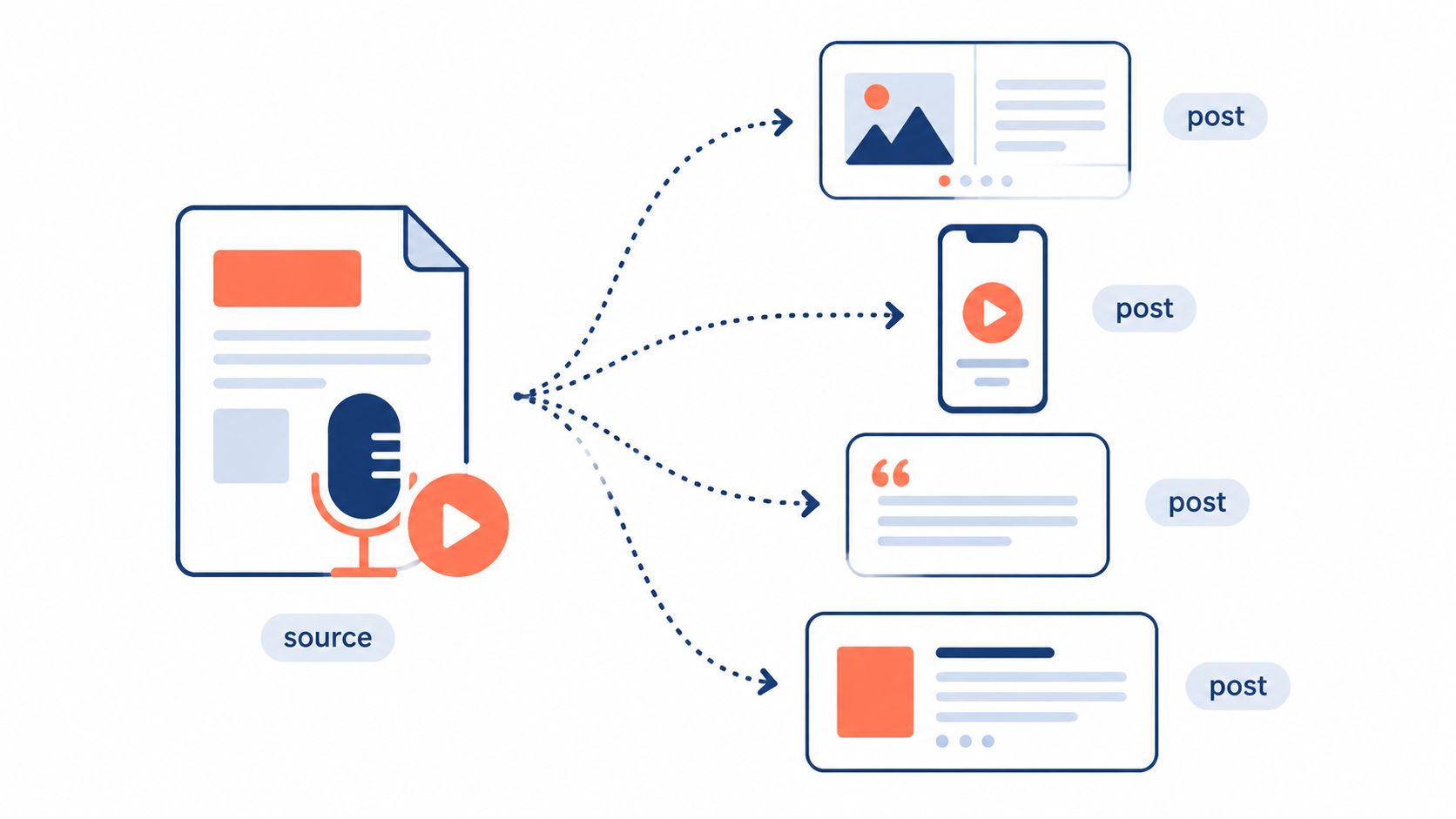
Build from one source, not five separate ideas
A consultant's newsletter can become a LinkedIn text post, an Instagram carousel, a quote card, and a short TikTok clip. An agency can do the same for multiple clients if each brand has a prebuilt kit with logos, fonts, colors, and voice rules. That's where tools such as WaveGen.ai fit well. They're built around source-to-asset repurposing instead of blank-page creation.
The trade-off is obvious. Repurposed content saves time, but lazy cross-posting feels recycled. You still need light editing so each post matches the platform and audience.
- Start with proven material: Repurpose source content that already performed well in email, search, webinars, or client conversations.
- Change the framing, not the core idea: Keep the message consistent, but rewrite the hook for each channel.
- Spread distribution across the week: Don't publish every derivative asset on the same day.
- Lock in brand rules once: A shared brand kit prevents every repurposed post from drifting visually or tonally.
For a deeper look at how brands approach this workflow, see this guide to content strategy for brands.
Practical rule: If a post can't be traced back to one clear source idea, your workflow is probably too chaotic to scale.
2. Carousel Posts and Multi-Slide Content
Carousels work because they create forward motion. A single image asks for a glance. A good carousel asks for a sequence of decisions: keep swiping, finish the idea, save this for later, send it to someone else.
They're especially useful for service businesses and experts who need to explain something with structure. A financial advisor can break down one investing mistake per slide. A coach can turn a client framework into a simple step-by-step narrative. A B2B consultant can summarize a long article into seven slides that still feel complete without the article.
Make the swipe earn its place
Most weak carousels fail on slide one. They open with branding, a vague title, or too much setup. Strong ones front-load a problem, a tension point, or a concrete promise. If the first few slides don't create momentum, the rest won't matter.
Here's a practical way to build them:
- Lead with the pain point: Put the problem, misconception, or desired outcome on the opening slide.
- Use one idea per slide: Dense slides kill completion.
- Keep design repeatable: Templates matter more than novelty if you publish often.
- End with one next step: Ask for a comment, save, or share. Don't stack three calls to action.
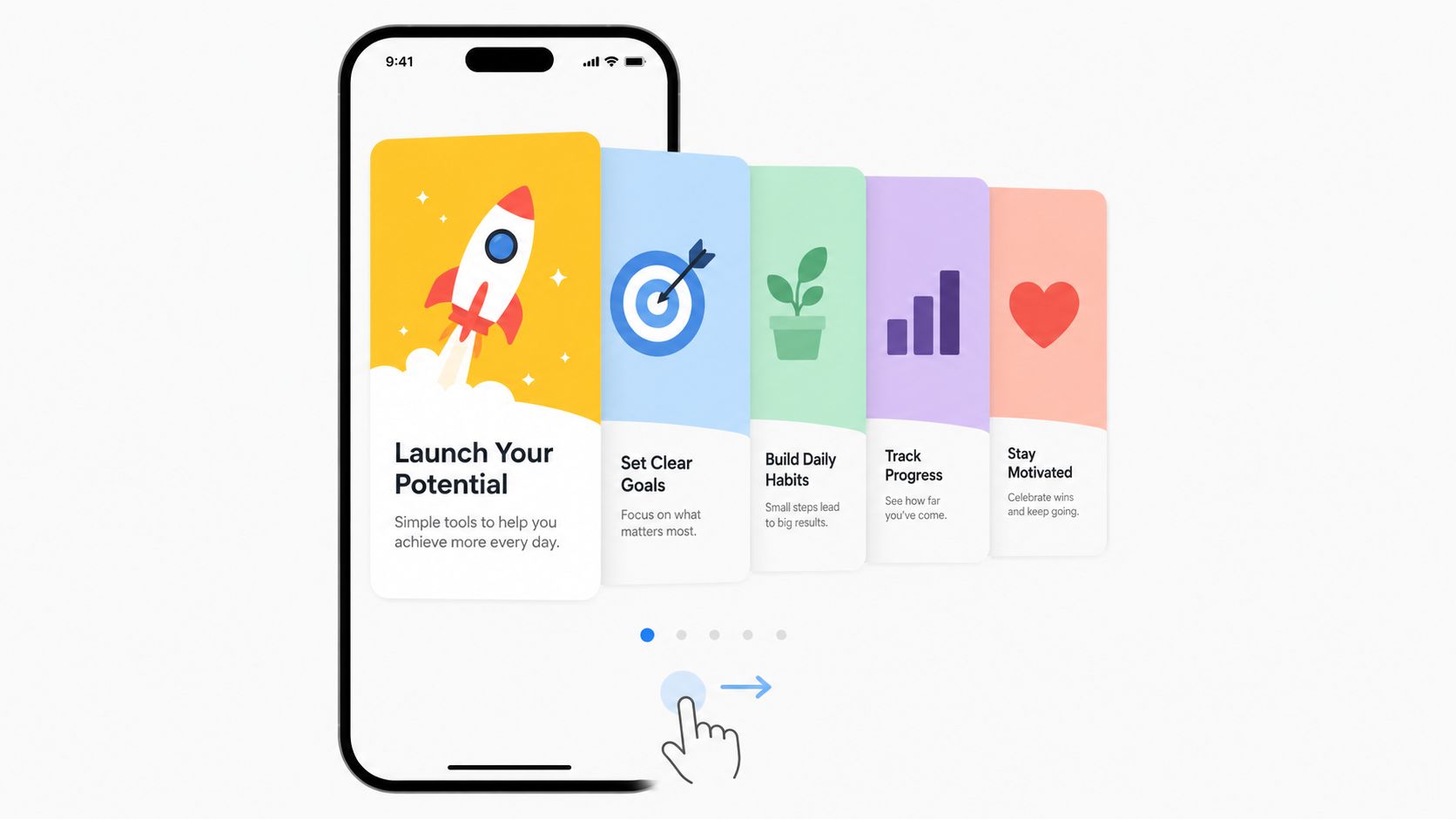
What works here is clarity. What doesn't work is turning a carousel into a mini white paper. If you need paragraphs on every frame, the format is wrong. Carousels are for sequencing and compression. That's why they pair so well with repurposing workflows. A long-form article already contains the structure. You're just reassembling it into slides people can absorb quickly.
3. Short-Form Video Content and Vertical Video Strategy
Short-form vertical video gives you one of the clearest paths to attention on social media because the format matches how people already consume content on their phones. You do not need high production value to make it work. You need a clear idea, a strong first line, and a workflow that turns one source asset into several usable clips.
That workflow matters more than the clip itself.
A webinar, podcast, customer interview, or long-form article can produce multiple short videos if you plan for extraction instead of posting one edited highlight and stopping there. One clip can answer a recurring objection. Another can teach a three-step framework. A third can challenge a bad assumption your audience keeps repeating. That is how short-form video fits into a sustainable engagement system instead of becoming a constant production burden.
Build clips around audience intent, not editing tricks
The fastest way to waste this format is to post polished clips with no reason to watch past the first second. Strong short-form video usually does one job well. It teaches one point, answers one question, or reframes one problem.
I use a simple filter before approving any clip:
- Does the first line create immediate relevance? Lead with the question, mistake, or outcome.
- Is the clip built around one takeaway? If it needs three ideas to make sense, split it.
- Does it match the platform behavior? A TikTok post, Instagram Reel, and YouTube Short can start from the same source, but the caption, pacing, and framing often need changes.
- Does it invite a specific response? Comments, saves, profile visits, and shares come from clarity, not from asking for “engagement.”
Captions help retention. Clean framing helps credibility. Tight editing helps pace. None of those can rescue a weak premise.
If you need a repeatable production system, this video content strategy guide shows how to move from source content to clip selection, scripting, and repurposing without rebuilding the process every week.
A practical example. A lawyer records a 20-minute explainer on contract risks. That single recording can become five vertical videos: one defining a common mistake, one answering a client FAQ, one breaking down a real clause, one covering a negotiation tip, and one responding to a misconception raised in the comments. The engagement win does not come from posting more video for its own sake. It comes from turning one useful asset into a structured sequence that meets people at different stages of interest.
4. Quote Graphics and Text-Based Visual Content
Not every brand needs to live on camera. Quote graphics still matter because they turn expertise into something fast to consume and easy to share. They're simple, branded, and useful when the insight is sharper than the production budget.
The best quote graphics don't feel motivational by default. They feel specific. A consultant's line about bad strategy gets more traction than a generic “keep going” message. A lawyer's plain-English warning about contract assumptions is stronger than a polished slogan. A creator's sentence pulled from a newsletter often performs better than the newsletter link itself because the value is immediate.
Turn sharp ideas into shareable visuals
The easiest source material is already in your long-form content. Pull one contrarian line, one framework, one definition, or one memorable sentence and design around it. Keep the visual clean enough to read on mobile.
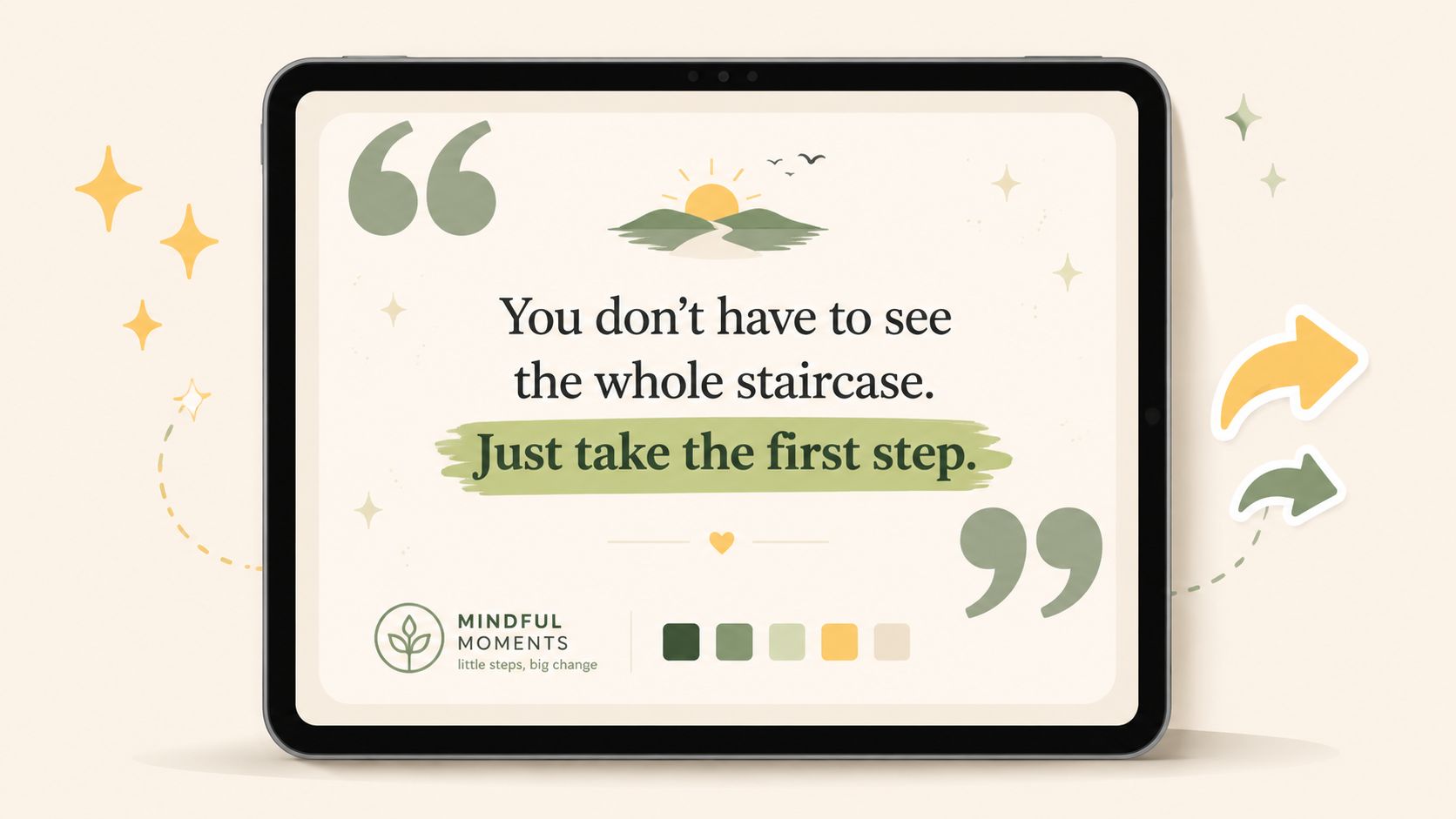
A few rules make these work better:
- Use contrast over decoration: Readability beats style flourishes.
- Stay inside the brand system: Repeating colors, fonts, and logo placement builds recognition.
- Write the caption for context: The image should hook attention. The caption should expand the point.
- Reuse strong performers: Good quote graphics often work again in Stories, Highlights, or paid distribution.
Short text visuals work best when the sentence sounds like something a real person would say out loud.
What doesn't work is manufacturing fake profundity. If the quote looks designed for engagement instead of designed to say something, people feel that immediately.
5. Consistent Posting Schedule, Content Cadence, and Automation
Consistency sounds obvious until you try to maintain it for months. That's where most social media engagement strategies fall apart. Teams confuse ambition with capacity, build an unrealistic publishing plan, then disappear for two weeks.
There's also a measurable efficiency angle here. A 2024 to 2025 Gartner analysis found that teams using source-to-asset repurposing workflows increased output volume by 3.2x while reducing average time per post by 62%. The lesson isn't “post everywhere.” It's “build a production system that your team can sustain.”
Consistency needs systems, not willpower
A solo consultant might publish three posts a week from one newsletter. An agency might batch a month of client content in advance, then schedule everything centrally. A small in-house team might use RSS-fed automation for routine distribution while keeping replies and community work manual.
Here's the trade-off. Automation protects cadence, but over-automation can flatten your voice. You should automate the repetitive parts, not the relationship parts.
- Choose a minimum viable cadence: Start with a schedule you can keep during busy weeks.
- Batch production ahead of time: Monthly batching reduces last-minute scrambling.
- Automate publishing, not conversation: Scheduling is efficient. Comment replies still need a human.
- Review patterns regularly: Cadence only helps if the content still earns attention.
If you need tooling ideas, WaveGen's guide to scheduling apps for social media covers the practical side of publishing workflows.
One reliable setup is simple: batch one source asset, generate multiple post formats, queue them across the week, then leave room every day for manual engagement. That's manageable for a solo operator and scalable for a team.
6. Community Engagement and Conversation Strategy
Social discovery creates interest fast. Conversation decides whether that interest turns into trust, qualified leads, or a dead end.
A lot of teams treat publishing as the finish line. In practice, publishing starts the next workflow. Someone comments with a real objection, asks for pricing, shares a use case, or pushes back on your point. If nobody answers clearly and on time, the content did its job and the operating system behind it broke.
That is why community management needs its own process, not leftover time between posts.
A strong setup is simple. Content creation fills the pipeline. Repurposing gives you enough surface area to attract replies across channels. Then community work closes the loop by turning reactions into conversations, content ideas, and sales insight. This is the part generic engagement advice usually skips.
Reply quality matters more than empty activity
A coach who responds with specific encouragement builds more loyalty than one who drops a string of emojis. A financial advisor who answers a practical question in plain English sounds more credible than one who pushes every comment toward a booking link. A consultant who turns repeated audience questions into follow-up posts gets two wins from the same interaction. Better trust now, better content inputs later.
That trade-off is real. Fast replies help, but low-value replies train your audience to expect nothing useful. The right standard is responsive and substantive.
A workable rhythm looks like this:
- Check early comments after publishing: Early replies help the post feel active and give other people a reason to join.
- Answer the main question: Give a clear point of view, a next step, or a useful example.
- Ask prompts that produce usable replies: “What's blocking results right now?” gives you better material than “Thoughts?”
- Tag recurring themes: Objections, FAQs, and strong audience phrasing should feed your next posts, carousels, and videos.
- Move sensitive problems to DMs: Handle billing issues, account specifics, or personal details privately while acknowledging the concern publicly.
What works in practice: Set a response standard your team can keep every week. For example, first review within a few hours during business days, deeper replies for high-intent questions, and a clear handoff for support or sales.
Community work is labor-heavy. That is exactly why it creates separation.
It also works best when it connects back to the rest of your system. One strong comment can become a quote graphic, a short-form video topic, a carousel slide, or a FAQ post. Tools can help you repurpose the signal once you capture it, including platforms like WaveGen.ai for turning source material into new formats, but the conversation itself still needs a human voice.
The teams that sustain engagement do not just post more. They publish, listen, reply, document patterns, and feed those patterns back into the next content cycle.
7. Platform-Specific Content Optimization and Native Formatting
Cross-posting the exact same asset everywhere is one of the most common social mistakes. It saves time in the moment and costs attention later. People can tell when a LinkedIn post was written like a TikTok caption, or when an Instagram graphic was shoved onto another platform without context.
There's also a trust angle. The 2025 Edelman Trust Report found that 54% of users lose trust in brands that appear generic or off-brand across channels. Native formatting matters, but so does recognizable identity.
Adapt the format without losing the brand
A consultant's article might become a polished LinkedIn post with tighter business language, a more visual Instagram carousel, and a punchier short-form video for TikTok. The idea stays the same. The packaging changes.
That packaging needs technical discipline. The strongest teams define format rules at the asset stage, not as an afterthought. Coursera's 2025 social media best practices study and Buffer's engagement analytics reported that brands automating platform-specific formatting reached 94% format compliance and a 33% higher click-through rate on sponsored posts than manual workflows.
A few practical standards help:
- Match the platform's native layout: Vertical for TikTok and Reels, square or document-style where that format performs better.
- Adjust tone without rewriting your identity: Formal isn't the same as stiff. Casual isn't the same as off-brand.
- Use native features: Post documents on LinkedIn, Stories on Instagram, short clips on TikTok.
- Check previews before publishing: Cropped headlines and broken text overlays kill otherwise solid posts.
Many teams often create false choices. They think they must pick brand consistency or platform relevance. Good execution gives you both.
8. Value-First Content and Education-Driven Engagement
Educational posts earn disproportionate attention because they give people a reason to stop, save, and return. In practice, that means social media engagement improves when content helps the audience do part of the job before they ever book a call or request a demo.
Useful content also fits the broader workflow better than one-off promotional posts. A strong teaching post can start as a client question, turn into a LinkedIn post, become a carousel, then feed short-form clips and follow-up replies in the comments. Teams using tools like WaveGen.ai to support repurposing and formatting can build that system faster, but the principle matters more than the software. One solid lesson should create multiple touchpoints.
Teach first, then route people to the next step
A lawyer can explain three contract red flags. A coach can break down one habit-building framework. A consultant can show how to diagnose a strategy issue before offering implementation. Those posts work because they reduce uncertainty. They also attract better conversations, since the people responding already understand the problem.
The structure is simple, but execution takes restraint.
- Name one specific problem: Use the phrasing clients and customers already use.
- Teach one action people can apply today: Posts get weaker when they try to deliver a full workshop in 200 words.
- Add a real example or failure pattern: Concrete context makes advice easier to trust and easier to remember.
- Make the offer a logical next step: The lesson should be useful on its own, with the service positioned as support for deeper work.
Often, teams struggle to strike the right balance. They either post vague inspiration that teaches nothing, or they give away so much detail that the point gets buried. Good value-first content sits in the middle. It gives the audience a win, proves your method, and leaves enough room for paid help to make sense.
One practical way to keep the pipeline full is to mine recurring audience questions. Save questions from comments, DMs, sales calls, and support tickets. Turn each one into a short educational post, then tag it by topic so it can be repurposed later. If the post needs stronger discovery support, pair it with relevant tags generated through a social media hashtag generator.
That approach compounds over time. You are not just posting helpful content. You are building a repeatable system that connects research, content creation, repurposing, distribution, and community response into one engagement loop.
9. Hashtag Strategy and Discoverability Optimization
A weak hashtag system wastes distribution. A strong one gives each post clearer topical signals, improves search and recommendation fit, and makes repurposed content easier to adapt across platforms.
Treat hashtags like a workflow decision, not a last-minute caption add-on. Build them into the content process while you draft, package, and repurpose each asset. If a post starts as a short video, becomes a carousel, then gets trimmed into a text post, the hashtag set should change with the format, audience intent, and platform behavior.
Use hashtags as classification, not filler
Broad tags can help with category alignment, but niche tags usually do more useful work. A leadership coach might pair a broad topic tag with tags tied to founder challenges, team communication, or executive coaching. A local service brand might combine service terms with city-specific phrases. The goal is fit, not volume.
Random tag blocks create noise. Repeating the same 20 hashtags on every post also makes the workflow lazy. Platform signals, search behavior, and audience language shift over time, so your tag sets should shift too.
A practical setup looks like this:
- Build tag banks by use case: Keep separate groups for topic, audience, offer, location, and campaign.
- Match tags to the post angle: A how-to carousel, a client story, and a product clip should not carry the same set.
- Adjust by platform: Instagram can support a broader tag mix. LinkedIn usually needs more restraint and tighter relevance.
- Review performance monthly: Save the combinations that bring qualified reach, profile visits, or useful conversations. Retire the ones that only add clutter.
If your team needs a faster starting point, use a social media hashtag generator to build relevant sets, then edit them manually based on platform and post type.
Hashtags work best inside a larger distribution system. Create the asset, tailor it to the platform, add tags that clarify context, publish on a consistent cadence, then watch comments and saves to see which themes deserve another version. That loop is what turns discoverability from guesswork into a repeatable process.
10. Authentic Storytelling and Behind-the-Scenes Content
Highly polished content creates distance when every post feels too finished. Behind-the-scenes content closes that gap. It shows process, judgment, mistakes, iterations, and the people doing the work.
Trust data supports that instinct. A McKinsey analysis from Q4 2025 reported that brands with a unified visual and tonal identity across channels see 28% higher retention than brands with fragmented content. Storytelling works best when it feels human but still recognizably yours.
Show the work behind the polished post
A consultant can document how they prepare for a workshop. A coach can share the thinking behind a new framework. A writer can show the draft-to-final process behind a newsletter issue. None of that needs to be overly personal. It just needs to reveal something real.
What tends to work:
- Share process, not just outcome: People connect with how the work gets made.
- Add a takeaway: A story without a lesson often feels self-indulgent.
- Use Stories and informal formats: They're better suited to rough edges.
- Keep voice consistent: Casual can still be on-brand.
One caution matters here. Authenticity isn't oversharing. You don't need to post every struggle or force vulnerability into your content. You need to sound like a real person with a point of view.
When brands do this well, the audience feels like they know the people behind the account. That changes how every future post is received.
10-Strategy Social Media Engagement Comparison
| Strategy | Implementation Complexity 🔄 | Resource Requirements ⚡ | Expected Outcomes ⭐ | Ideal Use Cases | Key Advantages 📊 | Tips 💡 |
|---|---|---|---|---|---|---|
| Content Repurposing & Multi-Channel Distribution | Moderate, workflow + formatting setup | Moderate, brand kit + scheduling tools | ⭐⭐⭐⭐, higher output & ROI | Brands/creators with long-form assets | Consistent messaging, time savings, scale | Start with top-performing long-form; customize slightly per platform |
| Carousel Posts & Multi-Slide Content | Moderate–High, per-slide design effort | Moderate, templates & design time | ⭐⭐⭐⭐, strong engagement & dwell time | Educational posts, B2B storytelling, lists | Better reach, storytelling, tutorial delivery | Front-load slides 1–3; include clear CTA on final slide |
| Short-Form Video & Vertical Strategy | Moderate, trend & hook knowledge | Moderate, frequent production cadence | ⭐⭐⭐⭐⭐, viral reach & shares | Awareness, Gen Z, product tips, highlights | High organic reach, shareability, repurposable | Hook in 1–2s; use captions; post 3–5x/week |
| Quote Graphics & Text-Based Visuals | Low, template-based design | Low, minimal production tools | ⭐⭐⭐, quick shares and impressions | Thought leaders, coaches, educators | Fast scale, high shareability, low barrier | Use high-contrast fonts, 2–3 fonts, include logo |
| Consistent Posting Schedule & Automation | Moderate, calendar and tool setup | Low ongoing, tool subscription + batch time | ⭐⭐⭐⭐, improved reach & sustainability | Agencies, solo creators, newsletter repurposing | Algorithm favor, reduced burnout, scalable | Batch monthly; start 2–3 posts/week; use RSS autopilot |
| Community Engagement & Conversation Strategy | High, real-time monitoring & moderation | High, human time for replies | ⭐⭐⭐⭐, loyalty, trust, conversion lift | Service providers, coaches, small brands | Builds relationships, feedback, UGC | Set response SLA, moderation policy, feature great comments |
| Platform-Specific Optimization & Native Formatting | High, tailoring to each platform | Moderate–High, format + tone adjustments | ⭐⭐⭐⭐, better platform performance | Multi-platform campaigns, targeted audiences | Authenticity, algorithmic advantage, better targeting | Study top performers; prioritize native features (Reels/Shorts/Docs) |
| Value-First Content & Education-Driven Engagement | Moderate, expertise-driven creation | Moderate, research and production time | ⭐⭐⭐⭐, trust, shareability, long-term ROI | Consultants, educators, B2B thought leaders | Authority building, evergreen traffic, higher-quality leads | Start with audience problems; offer frameworks/templates |
| Hashtag Strategy & Discoverability Optimization | Low–Moderate, research & rotation | Low, time to research & test | ⭐⭐⭐, increased discoverability to niches | Organic growth, niche communities, campaigns | Broader reach with low effort, campaign tracking | Rotate 20–30 tags; use 5–10 on IG, 2–5 on LinkedIn; track performance |
| Authentic Storytelling & Behind-the-Scenes Content | Low–Moderate, requires vulnerability | Low, simple documentation tools | ⭐⭐⭐⭐, strong emotional engagement & loyalty | Personal brands, founders, coaches, creators | Humanizes brand, parasocial bonds, low production need | Share lessons, balance personal & professional, use Stories/Reels |
Your Blueprint for Sustainable Social Media Engagement
The strongest social media engagement strategies don't live in isolation. They work because each one feeds the next. A long-form article becomes a carousel, a short video, a quote card, and a story prompt. A consistent posting rhythm keeps your brand visible. Native formatting helps each asset fit the channel. Community management turns attention into trust.
That system matters more than chasing isolated tactics. The social teams that struggle most usually don't lack creativity. They lack a workflow that can survive a busy month. That's why repurposing, scheduling, and brand consistency matter so much. They reduce the friction between having something worth saying and getting it in front of people.
There's also a clear operational trend behind that shift. Sprinklr's 2025 research found that 75% of social marketers planned to implement generative AI tools in 2024 to improve customer experiences. Used well, those tools help with packaging and production. They don't replace judgment, audience understanding, or community care. They give teams a better chance of maintaining cadence without turning every week into a content scramble.
Interactive content belongs in that blueprint too. Sprinklr's 2025 engagement report says interactive formats generate 2x higher engagement than passive formats, and brands using at least three interactive elements per week see a 42% lift in comment volume, a 28% increase in shares, and a 15% improvement in retention over 90 days. That doesn't mean you should force polls and Q&As into everything. It means you should build regular opportunities for people to participate, not just consume.
Brand consistency needs equal attention. A 2024 Meta-industry analysis of 5,000+ B2B and B2C accounts found that consistent branding correlates with a 27% increase in audience trust and a 19% boost in follower growth over six months. Teams that ignore this usually create a different version of themselves on every platform. The content may look native, but the brand feels fragmented. That's a long-term trust problem.
If you're putting this into practice, keep it simple at first. Pick two or three strategies from this list. For most consultants, advisors, coaches, and small teams, a strong starting mix is repurposing, short-form video, and active comment management. For agencies, add automation and brand-kit enforcement earlier because production complexity stacks fast across clients.
Sustainability is the ultimate goal. You want a social system that produces useful content consistently, adapts to platform behavior, and leaves enough time to respond to people. If a tool like WaveGen.ai fits your workflow, use it for what software does well: turning one source asset into multiple on-brand formats and scheduling distribution. Keep the human effort where it matters most: message quality, audience judgment, and real conversation.
If you want another perspective on planning that kind of system, this article on how to boost social media engagement is worth a read.
If you already publish articles, newsletters, podcast scripts, or video transcripts, WaveGen.ai can help you turn that source content into carousels, short videos, quote cards, captions, and scheduled posts without rebuilding the workflow from scratch each time.
social media engagement
content strategy
social media marketing
instagram engagement
linkedin marketing
Turn this kind of writing into a week of social content.
Paste a blog post, newsletter, or rough draft — WaveGen turns it into publish-ready carousels, captions, and slideshows for every channel.
No credit card · First posts in 2min