June 20, 2026
16 min read
Lawyer Content Marketing: A Step-by-Step Playbook for 2026
A complete lawyer content marketing playbook. Learn to define your audience, create ethical content, repurpose assets for social media, and measure real ROI.
Most law firms don't have a content problem. They have a systems problem.
The pattern is familiar. A partner says the firm should "do more content." Someone writes one article. It sounds polished, cautious, and technically correct. It gets posted without a distribution plan, without a follow-up asset, and without any way to tell whether it brought in the right matters. Three months later, the blog is stale, the attorney who was supposed to review drafts is buried in client work, and everyone concludes that lawyer content marketing doesn't work.
It can work. It just doesn't work as a side project.
A sustainable program for lawyers has to fit the conditions of legal practice: limited attorney time, ethics rules, uneven internal buy-in, and a constant need to turn attention into qualified consultations rather than empty traffic. The firms that get traction usually stop thinking in terms of isolated blog posts and start building a repeatable content system. One core idea becomes a service page update, an FAQ article, a short video, a follow-up email, and several social posts. Intake teams feed topics into the system. Marketing tracks whether those topics produce signed matters, not just impressions.
Table of Contents
- Why Most Lawyer Content Marketing Fails
- Building Your Content Foundation
- Choosing Your Content Formats and Workflow
- The Content Repurposing Engine
- Optimizing for Search and Distribution
- Measuring Real ROI and Iterating Your Strategy
Why Most Lawyer Content Marketing Fails
Most lawyer content marketing fails because firms publish what lawyers want to explain, not what prospective clients need to decide.
That gap shows up everywhere. The article is too broad. The language is too academic. The call to action is buried. The topic may be legally interesting, but it doesn't line up with a profitable practice area, an urgent client problem, or a decision stage where someone is choosing counsel. Content like that can make attorneys feel productive while doing very little for business development.
The market signal is clear. 58% of law firms and solo practitioners use marketing strategies, 71% of lawyers say they've generated new leads from social media, and firms with a coherent strategy report an average 3-year ROI of around 526%, while 65% say their website delivers the highest ROI, according to legal marketing statistics compiled by SeoProfy. The issue isn't whether content matters. The issue is whether the firm has a coherent strategy behind it.
The usual failure points
A weak program usually breaks in one of these places:
- No topic discipline. Firms chase whatever seems timely instead of building around core services and intake questions.
- No attorney-friendly workflow. Marketing waits on slow approvals, lawyers dread rewrites, and publishing slips.
- No repurposing. A long article gets one shot on the blog and then disappears.
- No business measurement. Teams celebrate pageviews while intake staff complain that leads aren't a fit.
Practical rule: If a content idea can't be tied to a client question, a service line, and a clear next step, it probably shouldn't be first in the queue.
The firms that make content pay treat it the way they treat operations. They define inputs, assign owners, standardize review, and measure results against business outcomes. That's less glamorous than "thought leadership," but it's what keeps publishing from collapsing after the first burst of enthusiasm.
Building Your Content Foundation
The strongest content calendar in a law firm usually starts in the intake department, not in a marketing meeting.
Prospects tell you every day what they want to know, what they're confused about, what language they use, and what they worry about before they hire counsel. That information is far more useful than a generic keyword list if your goal is to attract qualified consultations.
Start with intake, not brainstorms
A practical starting point is to collect the top 10 to 20 questions prospects ask by phone, email, and chat, cluster them by practice area, and turn them into FAQ-style pages or posts. That approach aligns with how people look for lawyers. 57% of consumers searched for a lawyer on their own, 59% asked for a referral, and 16% did both. Mobile devices account for 61.6% of U.S. internet access, which is one reason concise, mobile-first legal content performs better than long, academic essays, according to Attorney at Work's law firm marketing statistics summary.
That should shape how you build the foundation:
Pull real questions from real conversations
Review intake logs, consultation notes, chat transcripts, and recurring email threads. Ignore what sounds clever. Prioritize what prospects repeatedly ask before they hire.Group topics by service line
Separate informational topics from hiring-intent topics. "What happens after a DUI arrest?" serves a different purpose than "Do I need a DUI lawyer in [city]?"Create one page per question
Don't cram five different concerns into one sprawling article. One page should answer one core question cleanly, with a direct next step.Write for mobile stress reading
Prospective clients aren't studying for an exam. They're trying to solve a problem quickly, often from a phone.
A lot of firms also benefit from documenting tone and review standards before volume increases. If your team hasn't formalized voice, disclaimer language, formatting rules, and review ownership, a simple brand guideline framework for content teams can save hours of back-and-forth later.
Use ethics as a positioning advantage
Lawyers often treat ethics rules as a creative limitation. In practice, they can sharpen the brand.
Cautious firms usually earn more trust when they avoid inflated promises, vague superlatives, and dramatic case-result storytelling that creates risk. Clear disclaimers, jurisdiction-specific language, and careful distinctions between legal information and legal advice don't weaken the content. They signal professionalism.
A few ground rules matter:
- Avoid implied guarantees. Don't let marketing language promise outcomes you can't control.
- Be precise about jurisdiction. Legal guidance without jurisdictional context causes confusion fast.
- Review confidentiality exposure early. Repurposing intake calls, transcripts, or consultation notes requires discipline around privilege and sensitive facts.
For firms building a process around recorded consultations, internal meetings, or dictated attorney notes, a practical reference on navigating legal confidentiality in 2026 is useful because the operational risk usually appears before the content benefit does.
The safest content usually isn't the blandest. It's the clearest about scope, audience, and next steps.
That's the foundation. Not a giant editorial calendar. Not a vague commitment to "post more." A documented list of client questions, a service-led topic map, and guardrails that let attorneys approve content quickly without worrying that every draft creates compliance exposure.
Choosing Your Content Formats and Workflow
A managing partner records three good answers after a long day. One explains a fee structure clearly. One answers the question every prospect asks. One is too broad to publish without revisions. That is a more realistic starting point for law firm content than a color-coded editorial calendar.
Format choice should reduce attorney time and increase qualified consultations. If a format creates extra review cycles, weak calls to action, or content that attracts the wrong matters, it is the wrong format no matter how popular it is.
Match the format to the client question
Different questions need different formats because they sit at different points in the hiring process.
| Format | Best use | Strength | Limitation |
|---|---|---|---|
| FAQ article or blog post | Questions with legal nuance and search intent | Good for direct answers, service alignment, and search visibility | Easy to over-write and bury the CTA |
| Short video | High-friction questions that benefit from tone and clarity | Builds trust fast and works well on social channels | Needs concise scripting and review discipline |
| Downloadable guide | Complex matters where prospects need a step-by-step resource | Useful for follow-up and lead qualification | Takes more effort and can become stale if not maintained |
| Service page | Hiring-intent searches | Converts better when the need is immediate | Often underdeveloped because firms overfocus on blogs |
The practical test is simple. Ask what the prospect needs in that moment.
A bankruptcy firm answering "Will I lose my car in Chapter 7?" usually needs an FAQ article first, then a short video that lowers fear and explains the variables. A family law firm addressing "What documents should I bring to a custody consultation?" often gets more value from a checklist or intake guide than a long article. A plaintiff-side employment practice targeting "wrongful termination lawyer in [city]" should strengthen the service page before publishing another thought-leadership post.
That trade-off matters. Traffic from research-stage topics can fill the top of the funnel, but service pages and decision-stage content usually produce the stronger inquiries. Busy firms should build around both, with more production time going to assets that support signed matters.
Build a workflow attorneys will actually follow
The firms that keep publishing are rarely the firms with the biggest marketing team. They are the firms with a simple approval process and clear ownership.
A workable model looks like this:
Monthly topic selection
Choose a short list tied to current practice priorities, referral opportunities, and matter value.Attorney voice capture
Have the lawyer talk through each topic for five to ten minutes instead of drafting from scratch. Spoken explanation is usually faster, clearer, and easier to turn into multiple assets.Template-based drafting
Use repeatable structures for FAQs, service pages, myth-versus-fact posts, consultation prep guides, and short videos.Single-review approval
Route each draft to one reviewing attorney unless the topic raises unusual risk or crosses practice groups.
This is a production system, not a one-post exercise. The goal is to create one strong source asset, approve it quickly, and make it usable across channels without reopening legal review every time.
For many firms, the most efficient weekly cadence is modest. One strong article or service-page update. A few short videos cut from attorney answers. A short email or social post that points prospects back to the core asset. Teams that need a repeatable process for turning one source piece into several channel-ready assets can borrow from this social media content workflow for repurposing one idea into multiple posts.
Restraint usually wins here. A podcast, newsletter, webinar series, and daily LinkedIn posting schedule can sound ambitious, but they often collapse under attorney review burden. Pick two or three formats that fit your buyer journey, staffing reality, and case economics. Then run them on a schedule your firm can maintain.
The Content Repurposing Engine
The easiest way to burn out a law firm marketing team is to demand original content for every platform.
A better system starts with one substantial source asset and then breaks it into smaller pieces. That keeps messaging aligned, gives attorneys fewer review cycles, and reduces the scramble to invent new topics every day.
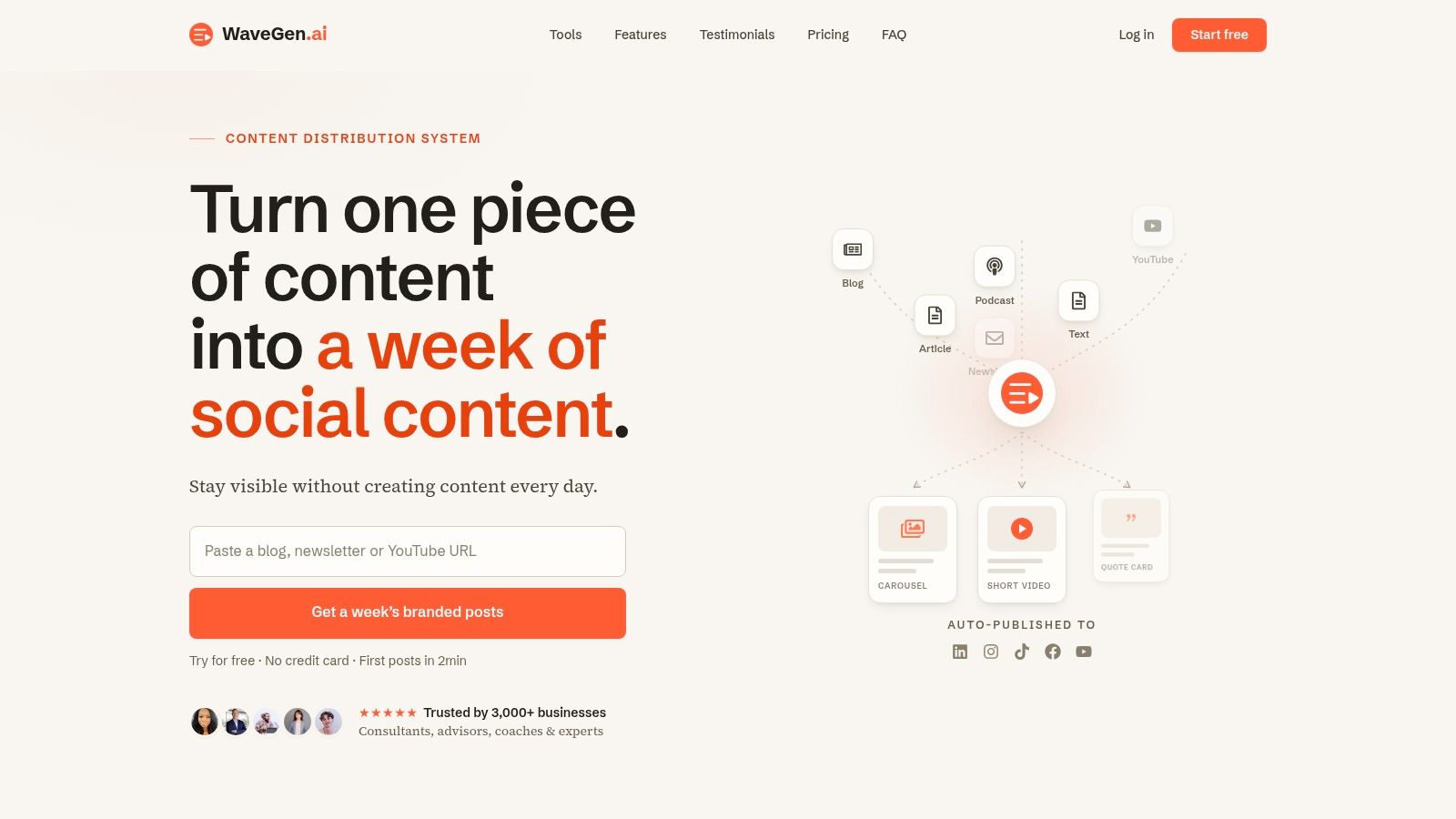
One probate article becomes a week of assets
Take a probate firm with a core article on "Navigating Probate in California." If the article is well structured, one piece can support a full week of distribution without repeating itself.
Here is what that can look like:
Blog article
The anchor asset answers the full question, outlines the process, addresses common misconceptions, and gives readers a clear consultation path.LinkedIn carousel
Turn the major steps into slides such as filing, notice requirements, court oversight, and typical delays. This format works well for professionals and referral partners.Short video clips
Pull out narrow questions like "Does every estate go through probate?" or "What's the executor responsible for?" Those become concise videos with a direct hook.Quote cards
Extract short, cautionary points such as timing mistakes, document issues, or family conflict triggers.Email follow-up
Send a brief summary to referral sources or prospects already in your pipeline.
What matters is not volume for its own sake. What matters is that every asset points back to the same strategic topic and the same service objective.
One tool category that helps here is AI-assisted repurposing. Teams often use editors, captioning tools, design platforms, and scheduling software in combination. For firms that want a single system to turn one source piece into social assets, AI content repurposing tools are worth comparing based on review controls, brand consistency, and publishing workflow.
Repurposing without losing legal accuracy
Repurposing breaks when firms compress nuance too aggressively.
A good legal repurposing process keeps one source of truth. The attorney approves the core article or transcript first. Then marketing extracts shorter assets from that approved source, rather than rewriting the substance from scratch on each platform. That reduces drift.
Keep the explanation short, not sloppy. Short-form legal content still needs jurisdiction, scope, and a clear boundary between general information and advice.
That principle matters most in video. A lawyer can answer a probate question in under a minute, but the script still needs to avoid overgeneralizing.
Here's a useful example of how teams think about turning one source asset into multiple formats while keeping platform-specific output manageable:
Repurposing also creates a healthy operational side effect. It forces firms to define the core message for each service line. Once that's clear, every downstream asset becomes easier to produce, approve, and measure.
Optimizing for Search and Distribution
A strong legal article that no one sees is a sunk cost.
Search and distribution should work together. One captures active demand. The other extends reach among referral partners, former clients, local audiences, and prospects who aren't ready to contact a lawyer the first time they encounter the firm.
Structure pages for local intent
Most firms already know they need local visibility. Fewer build content that reflects how local legal searches happen.
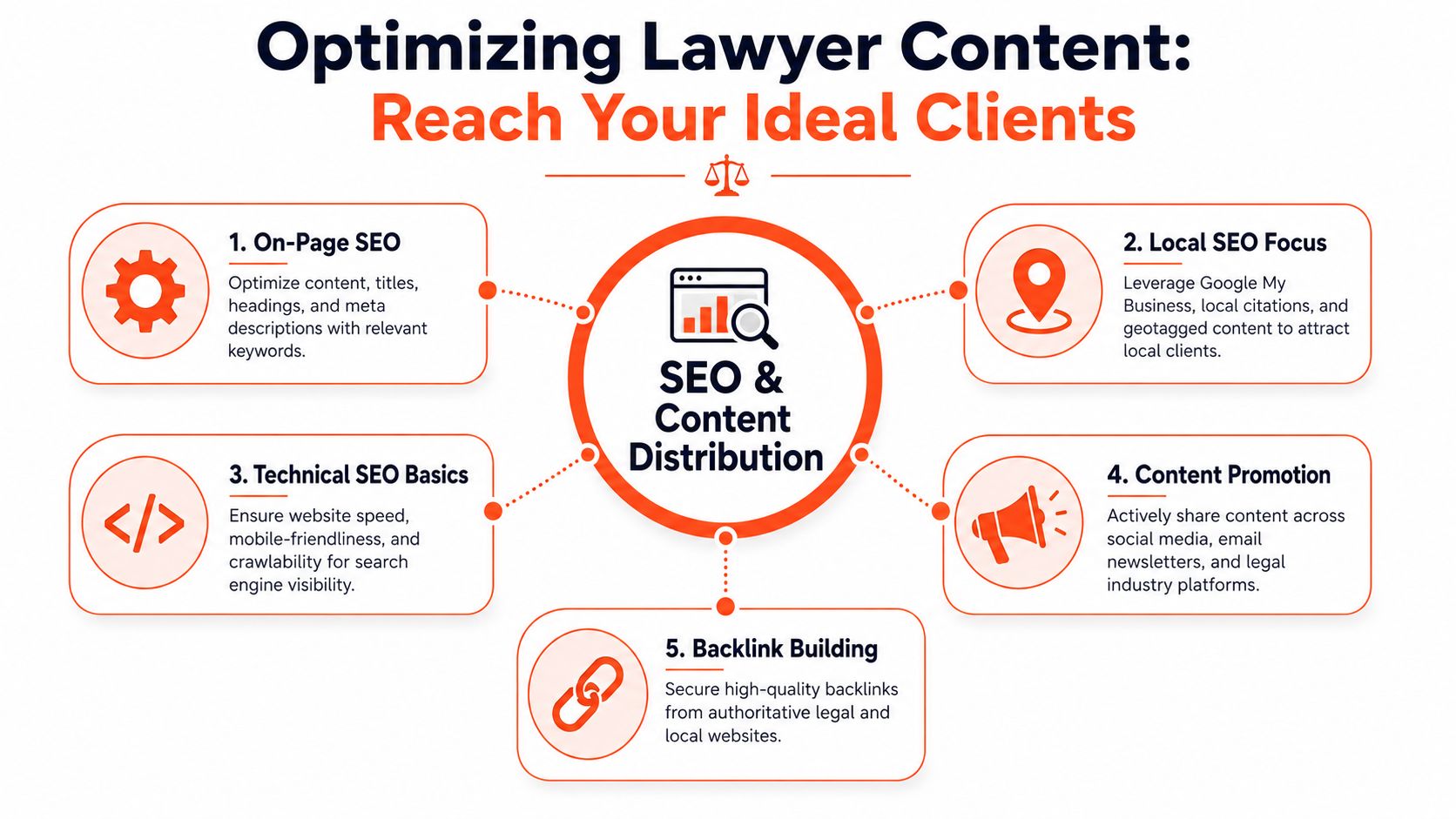
For a practice area page or article to perform, the page needs clear service relevance, geographic relevance, and decision-stage clarity. That usually means the title, headings, body copy, and CTA all reinforce the same local service intent. A service page for "estate planning lawyer in Denver" should not read like a general encyclopedia entry on trusts. It should address the local prospect's hiring question.
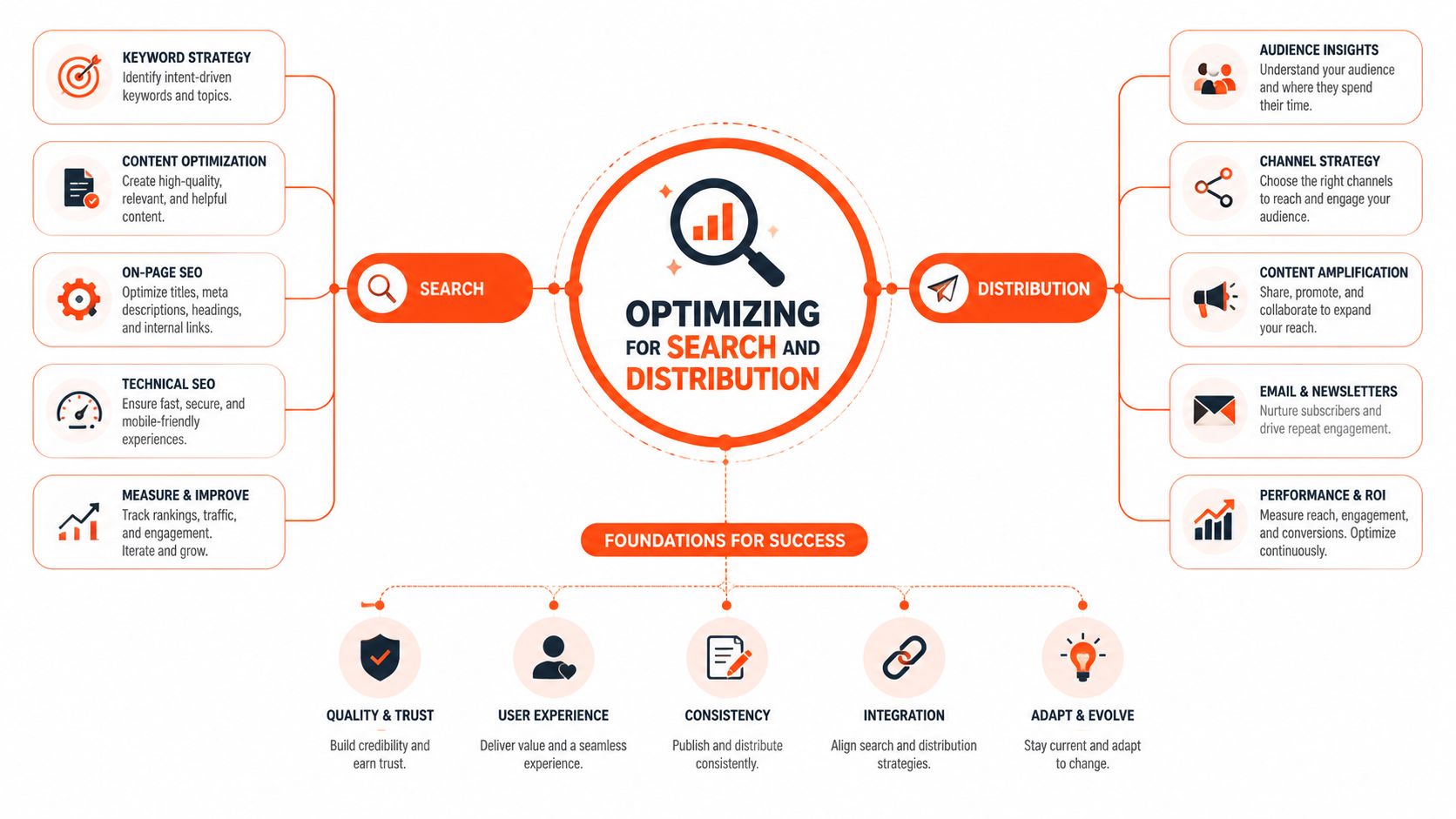
A practical local distribution stack often includes:
- Service pages first. These capture direct hiring intent better than most blog posts.
- Supportive FAQ content. Use blog or resource content to answer narrower questions and funnel readers to the relevant service page.
- Google Business Profile alignment. Make sure the location, categories, and core services match what the website emphasizes.
- Referral-friendly social distribution. LinkedIn often matters more for local professionals and referral sources than broad awareness posting.
Search isn't the whole game in legal. Some matters originate from referrals that still validate the firm online before making contact. Good distribution helps those prospects encounter the same message in more than one place.
Prepare for AI-shaped search behavior
Law firms also need to adapt to how search behavior is changing. Recent legal marketing guidance now emphasizes topical clusters, generative engine optimization, and divisible multi-format content because AI-generated summaries are increasingly acting as the intermediary between the searcher and the website, as discussed in Attorney at Work's guidance on law firm content marketing and AI-shaped search.
That changes content structure.
A page written for AI-shaped search usually performs better when it has:
- Direct answers early. Put the core answer near the top, before long background sections.
- Tight topical clusters. Connect service pages, FAQs, myths, and procedural explainers around one practice area.
- Divisible sections. Clear headings, concise summaries, and distinct question-answer blocks make extraction easier.
- Consistent terminology. Use the language prospects use, then explain legal terms instead of leading with jargon.
A page built for AI summaries still needs to persuade a human. Visibility without trust won't produce consultations.
That means distribution still matters after publication. Send the article to your email list. Share a short insight on LinkedIn. Give intake staff the link so they can use it in follow-ups. Search gets the content discovered. Distribution gets it reused.
Measuring Real ROI and Iterating Your Strategy
A managing partner looks at the monthly report and sees traffic up 38%. Good news, until intake shows the new matters came from referrals and paid search, not the blog. That happens constantly in law firm marketing. Activity gets reported. Revenue does not.
Content ROI for a firm starts lower in the funnel. Track qualified consultations, practice-area fit, matter value, and signed cases. A page that brings in five strong employment matters beats a post that pulls in 2,000 visits from students, job seekers, or people outside your jurisdiction.
One benchmark from Strategies and Voices on raising the bar in law firm content marketing puts the target in business terms: qualified consultation requests from organic search, tied to the types of matters a firm wants. That is the right frame. Busy firms do not need more dashboards. They need clearer evidence that the content system is producing cases worth opening.
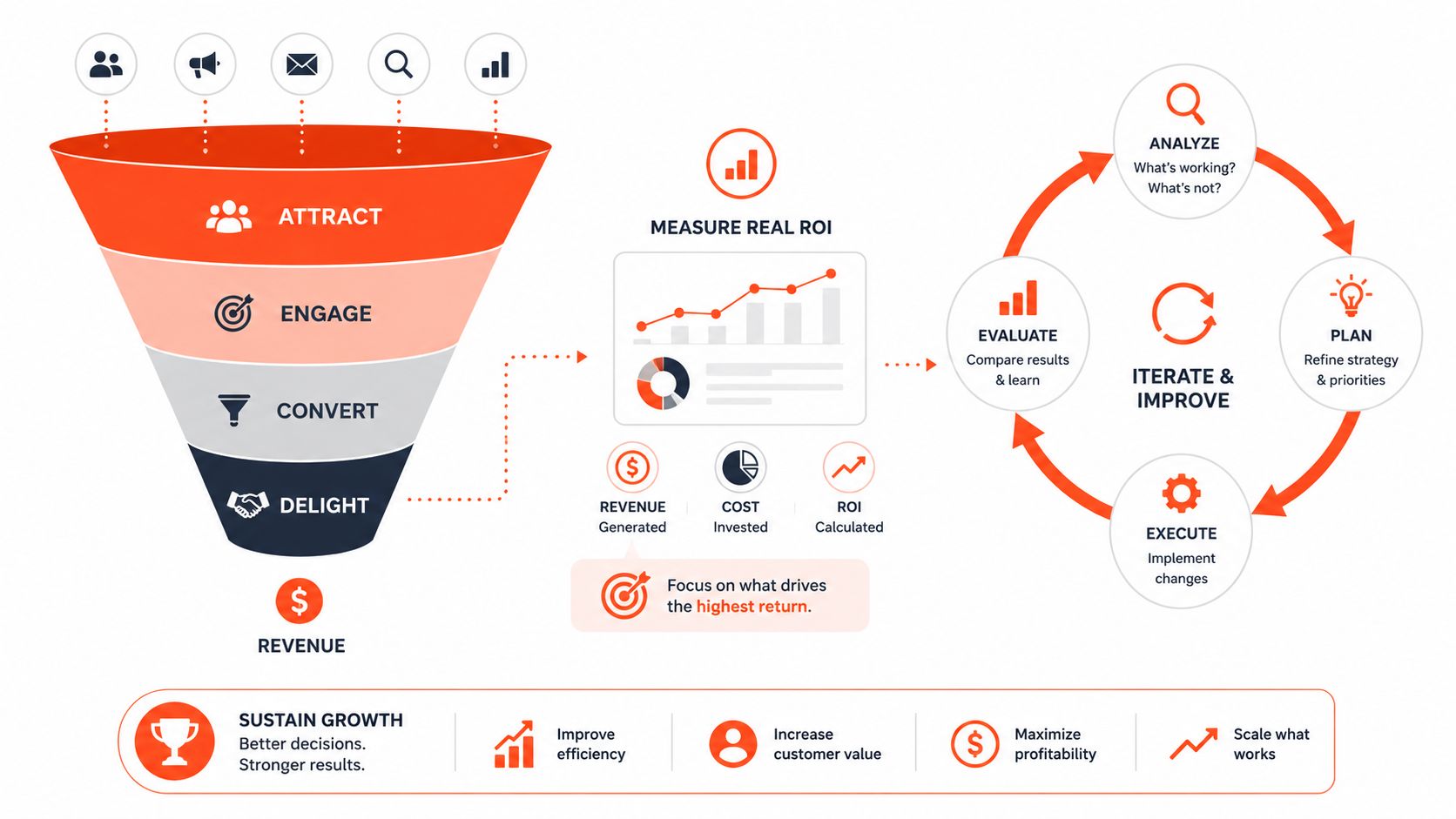
A practical dashboard usually has four layers:
| Metric layer | What to watch | Why it matters |
|---|---|---|
| Visibility | Search impressions, ranking movement, reach by channel | Confirms prospects can find the content |
| Engagement | Time on page, scroll behavior, video completion, CTA clicks | Shows whether people are consuming it |
| Lead quality | Qualified consultation requests, practice-area fit, location fit | Separates researchers from real prospects |
| Revenue impact | Signed matters, case value, retained clients by content source | Connects content to firm growth |
The hard part is not collecting marketing data. It is connecting that data to intake and signed matters.
Set up forms so page paths and campaign sources are captured. Ask every lead how they found the firm, then standardize the answers so intake does not log ten versions of "Google." Mark whether the inquiry was qualified. If the CRM allows it, label the originating asset type: service page, FAQ, webinar replay, article, guide, or video landing page. Firms that do this well stop arguing about whether content "feels useful" and start seeing which assets produce valuable cases.
For teams building that reporting discipline, this content marketing measurement guide for 2026 is a useful reference because it keeps the discussion on pipeline and revenue, not vanity metrics.
Use a simple review loop
Skip complex attribution models unless the firm has the volume and staff to support them. A monthly review is enough for many practices, especially if the goal is to improve a repeatable content system instead of chasing one-off wins.
Use a review cycle like this:
- Keep content that produces qualified consultations or assists strong referral and intake conversations.
- Improve content that ranks or gets attention but does not convert. In legal marketing, the problem is often weak topic-to-offer alignment, a vague CTA, or a page that answers the question but never explains why the firm is the right next call.
- Cut back on formats that consume attorney time and produce little business value.
- Refresh older pages when the law changes, search demand shifts, or the CTA no longer matches current case priorities.
At this juncture, firms either build momentum or waste another quarter. Repurposing only works if the source asset is worth repurposing. If one FAQ page drives consultations, turn it into a short video, an email follow-up, a social post, and an intake support resource. If a broad educational article gets polite engagement and no matters, stop feeding it more production time.
The point is simple. Measure content by the cases it helps generate, the case value it influences, and the efficiency it creates across the whole system. Traffic still matters, but only as an early signal. Revenue decides what stays in the plan.
If you're building a sustainable lawyer content marketing system, WaveGen.ai can help turn one approved article, transcript, or newsletter into on-brand social assets for multiple channels without forcing your team to create from scratch every day. That makes it easier to maintain cadence, repurpose responsibly, and keep distribution moving while attorneys stay focused on client work.
lawyer content marketing
legal marketing
law firm marketing
content for lawyers
attorney SEO
Turn this kind of writing into a week of social content.
Paste a blog post, newsletter, or rough draft — WaveGen turns it into publish-ready carousels, captions, and slideshows for every channel.
No credit card · First posts in 2min